Plan your dream boat purchase with our Boat Loan Calculator. Enjoy low rates, flexible terms, and quick estimates to find the best finance for your lifestyle.
Calculator results are estimates only and not quotes. Actual quotes will be provided by licensed brokers after you submit an enquiry.
Boat Loan Details:
Important!
Boat Loan Interest Rates differ from lender to lender and will depend on your individual circumstances (credit history, employment status, age, etc.). To find out if you qualify ... and for a free, personalised interest rate and repayment quote,
please CLICK HERE
Boat Loan Amortisation Calculator
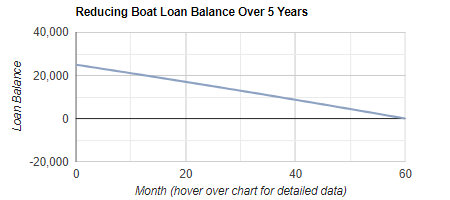
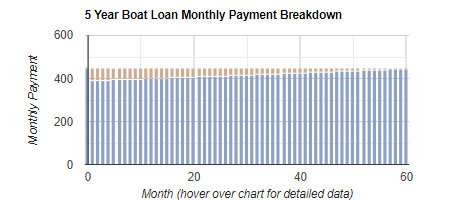
The following amortisation graphs detail month-by-month data on the progress of the proposed loan. The first chart below examines the reducing loan balance over the course of the finance contract term. The second graph illustrates the portion of each monthly repayment allocated to payment of interest vs principal reduction.
How to use our Boat Loan Repayment Calculator
Our Boat Loan Repayment Calculator helps you estimate repayments for boat finance before you apply, so you can plan a budget that suits your lifestyle and compare different loan terms, interest rates and deposit options. It is important because small changes to the interest rate or loan term can materially change your monthly repayment and the total interest paid over the life of the loan.
How to complete the calculator for the best estimate
1. Purchase Price
Enter the total purchase price of the boat in Australian dollars as a whole number only, with no commas or decimal points. For a more realistic result, consider whether you want to include other costs you may finance, such as stamp duty, registration, insurance and accessories, where applicable.
2. Deposit or Trade-in Value
If you have cash savings or a trade-in, enter that amount as a whole number. A larger deposit generally reduces the amount you need to borrow, which can reduce repayments and total interest.
3. Term of Loan (Years)
Select the number of years you want to repay the loan over. A longer term usually lowers repayments, but often increases the total interest cost across the loan.
4. Interest Rate (Per Annum)
Choose an indicative annual interest rate for the simulation. Use a conservative rate if you are unsure, and consider testing multiple rates to understand best and worst case affordability. Your actual rate may differ based on lender policy and your personal circumstances.
5. Calculate
Select calculate to generate your estimate.
How to interpret the results
Review the estimated repayment amount and the amortisation information. The reducing balance chart shows how the loan balance may fall over time. The interest versus principal chart shows how early repayments typically include a higher interest portion, with more principal repayment later in the term.
ASIC and lending disclaimer: This calculator provides general information only and does not consider your objectives, financial situation or needs. Results are estimates and may not include lender fees, ongoing charges or changes in rates. Credit is subject to approval and you should check the final loan contract terms and your ability to meet repayments before proceeding.
Finance brokers can help Australian borrowers understand loan options, prepare an application and approach suitable lenders. This guide explains what brokers do, how the broker process works, what information borrowers may need to provide, and how fees and commissions can apply. - read more
Debt consolidation loans serve a crucial purpose in the financial toolbelt of individuals juggling multiple debts. At its core, consolidation is the process of combining several loans or liabilities into one single loan. This technique is not just a clerical convenience but a strategic move that can transform repayment chaos into manageable order. By merging debts, borrowers can often secure better interest rates, lower monthly payments, and a more transparent repayment timeline. - read more
Understanding your borrowing power is an essential step for anyone looking to take out a loan. This concept represents the amount of money you're eligible to borrow from a lender, whether it’s for purchasing a home, a car, or investing in your future. Knowing your borrowing power not only sets realistic expectations but also guides you in financial planning and budgeting for your loan repayments. - read more
Understanding the loan application process can be quite challenging. However, with the right tools, it becomes much easier to navigate. One of these essential tools is a loan calculator. - read more
The latest Reserve Bank lending-rate data gives Australian small business owners another reason to look beyond the first offer on the table. While business credit has continued to expand through 2026, the price paid by smaller borrowers remains highly dependent on loan structure, security, trading history and lender appetite. - read more
The Reserve Bank’s latest financial aggregates add another chapter to the borrowing story that has been building through 2026. The July update indicates that private sector credit is still expanding, with business lending remaining an important source of momentum. For SMEs, sole traders and self-employed borrowers, this extends the pattern seen in the earlier June credit data: demand for funding has not disappeared, even while interest rates and lender scrutiny continue to shape approval outcomes. - read more
The Reserve Bank’s latest meeting minutes have added more detail to the message borrowers heard after the earlier August rate decision: policy makers are not yet ready to declare victory over inflation, even if some parts of the economy are clearly slowing. For households, sole traders and SMEs, that means borrowing plans still need to be built around current lending conditions rather than expectations of a quick fall in rates. - read more
The Reserve Bank of Australia’s August decision to leave the cash rate unchanged at 4.35% keeps a familiar message in place for Australian borrowers: relief may come eventually, but loan decisions still need to be made on today’s numbers. For households, sole traders and SMEs, the practical issue is not only where rates sit now, but how lenders assess affordability while policy remains restrictive. - read more
The latest Reserve Bank financial aggregates extend a pattern that has been building for several months: Australian businesses are still leaning on credit, even while borrowing costs remain elevated and lenders continue to scrutinise applications closely. Private sector credit continued to grow over the month and across the year, with business lending again a key contributor to overall momentum. - read more