The information on this website is general in nature and does not take into account your objectives, financial situation, or needs. Consider seeking personal advice from a licensed adviser before acting on any information.
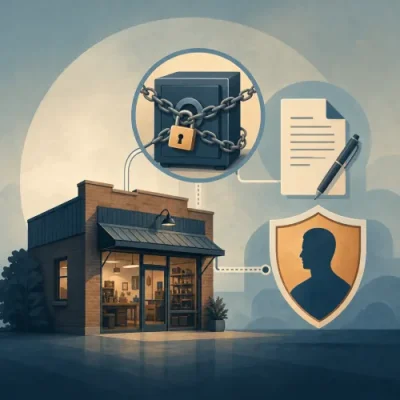
Business loan security, collateral and personal guarantees can affect how lenders assess risk, what documents they request and what may happen if repayments are not met. This guide explains the key concepts for Australian small business borrowers.
When applying for business finance in Australia, you may be asked whether the loan will be secured, whether the business can offer collateral, or whether directors or owners are willing to provide a personal guarantee. These terms can materially affect the risk you take on as a borrower, not just the lender’s decision.
This guide explains business loan security, collateral and personal guarantees in practical terms. It is general information only and does not take into account your business structure, financial position or legal obligations. Before signing loan or guarantee documents, consider getting independent legal, accounting or financial advice.
If you are still comparing the broader finance pathways available to your business, Anyloan provides information about business finance pathways across personal and business loans, leasing and finance options.
What does business loan security mean?
Business loan security is an asset or legal right a lender can rely on if the borrower does not meet the loan obligations. In simple terms, security gives the lender a stronger recovery position if the loan goes into default.
A secured business loan is not automatically safer for the borrower. It may reduce lender risk, and in some cases may help an application or affect pricing, but it can also put business or personal assets at risk. The outcome depends on the lender’s criteria, the asset offered, the borrower’s financial position and the loan structure.
Common forms of business loan security may include:
- Property security: a residential, commercial or investment property used to support the loan.
- Vehicle or equipment security: a financed asset such as a ute, truck, machine or other business equipment.
- Business assets: stock, invoices, plant, machinery or other assets owned by the business.
- Cash or term deposit security: funds held as security, where offered and accepted by the lender.
- A general security agreement: a broader security interest over some or all assets of the business.
Security is different from repayment capacity. Even if a business has valuable assets, lenders will generally still want to understand cash flow, revenue, expenses, existing debts, credit history and the purpose of the loan.
Collateral in business finance
Collateral is the asset pledged to support a loan. It is what the lender may have rights over if the borrower defaults and the issue is not resolved. Collateral can be specific, such as one vehicle, or broader, such as business assets covered by a general security agreement.
For small businesses, collateral can influence how a lender views risk. Stronger, easier-to-value assets may be treated differently from assets that are specialised, hard to sell or already subject to another lender’s security interest. Lenders may also consider whether the asset value is likely to change over time.
Specific security over an asset
Specific security is linked to a particular asset. For example, a lender may finance a vehicle or piece of equipment and take security over that asset. If repayments are not made and the default is not remedied, the lender may have rights to repossess or sell the asset, subject to the loan documents and applicable processes.
This type of security is common in vehicle and equipment finance. The asset being purchased is often central to the transaction, and the lender may want proof of purchase, insurance details and information about the asset’s condition and use.
General security agreements
A general security agreement, often called a GSA, may give a lender a security interest over a company’s or business’s present and future assets. This can be broader than security over one item.
Security interests in personal property may be registered on the Personal Property Securities Register, commonly known as the PPSR. A PPSR registration can affect how business assets are dealt with, including when refinancing, selling assets or seeking additional finance. The exact effect depends on the documents, the registration and the circumstances.
Because a GSA can be broad, borrowers should understand what assets are covered, whether there are restrictions on selling or replacing assets, and what happens if the business wants further finance later.
What is a personal guarantee for a business loan?
A personal guarantee is a promise by an individual to meet the borrower’s obligations if the business does not. In business lending, personal guarantees are commonly requested from company directors, business owners or related parties, depending on the lender and the structure.
This is important because a company is a separate legal entity from its directors and shareholders. A personal guarantee can create a direct personal obligation for the guarantor, even where the loan is in the company’s name. If the business defaults, the lender may be able to pursue the guarantor under the guarantee terms.
A personal guarantee business loan can therefore expose personal assets or personal income to risk. That does not mean every guarantee will result in personal loss, but it does mean the guarantor should understand the potential consequences before signing.
Limited and unlimited guarantees
Some guarantees may be limited to a stated amount. Others may be broader and cover the full debt, interest, fees, enforcement costs and related obligations. The wording matters.
Borrowers and guarantors should check whether the guarantee is:
- limited to a specific dollar amount or unlimited;
- limited to one loan or extended to other obligations with the same lender;
- supported by personal assets, such as property;
- continuing until formally released by the lender;
- joint and several, meaning one guarantor may be pursued for more than their perceived share.
Do not assume a guarantee ends automatically when you resign as a director, sell the business or reduce your shareholding. A formal release may be required, and lenders may not agree unless their risk position remains acceptable.
Secured versus unsecured business loans
The difference between secured and unsecured business loans is often misunderstood. A secured loan involves specific security or collateral. An unsecured loan does not rely on a particular asset in the same way, but it may still involve other obligations, including a personal guarantee.
For a broader comparison of available finance types, see common business loan options for Australian small businesses.
| Feature |
Secured business loan |
Unsecured business loan |
| Asset security |
Usually linked to property, equipment, vehicles, receivables or business assets. |
No specific asset may be taken as security, although lender terms vary. |
| Personal guarantee |
May still be required, especially for companies and SMEs. |
Often requested for company borrowers, depending on lender criteria. |
| Borrower risk |
Specific assets may be at risk if the borrower defaults. |
There may be no specific secured asset, but default can still lead to legal recovery action, credit impacts and guarantor liability. |
| Lender assessment |
Assessment may consider asset value, cash flow, credit history and business performance. |
Assessment may place more emphasis on cash flow, trading history, credit profile and the strength of guarantors. |
| Cost and terms |
May differ depending on the asset, risk and lender policy. |
May differ because the lender may see higher risk without asset security. |
Unsecured business loan risks
Unsecured business finance can be useful where a business does not want to pledge a specific asset or does not have suitable collateral. However, “unsecured” does not mean risk-free.
AnyLoan Australia Weekly NewsCast
 This week: lenders continue repricing after the RBAs November move to 4.85%, with updates still landing by Friday. The RBAs 9 November speech highlights ongoing inflation pressures from AI‑related investment, oil prices and capacity constraints, so plan for rates to stay higher for longer. The Aussie dollar sits around 68 US cents as of Friday, affecting imported equipment and vehicle costs for SMEs considering leasing versus buying. RBA minutes arrive Tuesday, 17 November. Visit anyloan.com.au for guides, comparisons and calculators.
Potential unsecured business loan risks include:
- Personal guarantee exposure: directors or owners may still be personally liable if the business cannot repay.
- Higher repayment pressure: depending on the offer, unsecured facilities may have shorter terms or higher repayments than some secured alternatives.
- Credit and enforcement consequences: missed repayments can affect future borrowing and may lead to recovery action.
- Cash flow strain: a loan that looks manageable at approval may become difficult if revenue falls, customers pay late or costs rise.
- Refinancing limitations: if business performance changes, refinancing later may not be available on similar terms.
Before accepting any facility, consider modelling the repayment impact under different trading conditions. General tools on the calculators page may help you test repayment scenarios, but calculator results are estimates only and do not confirm eligibility, pricing or approval.
How lenders may assess security and guarantees
Lenders use security and guarantees as part of a broader risk assessment. The process varies between lenders, loan types and borrower profiles. A lender may consider:
- the business’s trading history and financial statements;
- bank statements, cash flow and revenue consistency;
- existing debts, tax liabilities and other obligations;
- the purpose of the loan and how funds will be used;
- the value, type and condition of collateral;
- whether the asset is already financed or pledged elsewhere;
- the credit history of the business, directors and guarantors;
- the business structure, ownership and industry risk;
- the guarantor’s financial position and ability to support the guarantee.
No single factor guarantees an outcome. Strong security may not overcome weak repayment capacity, and strong cash flow may not remove the need for guarantees where a lender’s policy requires them.
What can happen if a secured business loan defaults?
If a borrower misses repayments or breaches the loan agreement, the lender will usually follow the process set out in the loan documents and any applicable laws or codes. The consequences depend on the loan, the borrower type, the security and the lender’s procedures.
Possible consequences may include:
- default interest, fees or enforcement costs, where allowed under the contract;
- demands for payment from the business borrower;
- demands against guarantors;
- restrictions on further drawings under a facility;
- repossession or sale of secured assets;
- legal recovery action;
- negative impacts on credit files or future borrowing capacity.
If a business is under repayment pressure, it is usually better to contact the lender early rather than waiting until the position worsens. The options available will depend on the lender, the product and the borrower’s circumstances.
Questions to ask before offering security or signing a guarantee
Business loan documents can be technical. Before agreeing to collateral or a personal guarantee, consider asking the lender, broker or adviser questions such as:
- What exact asset or assets are being used as security?
- Will a security interest be registered on the PPSR?
- Is the guarantee limited or unlimited?
- Does the guarantee cover only this loan or other current and future debts?
- What events could trigger default?
- What fees, default costs or enforcement costs could apply?
- Can the security or guarantee be released later? If so, on what conditions?
- What happens if one director leaves the business?
- Could this security affect future borrowing, asset sales or refinancing?
- Should each guarantor obtain independent legal advice?
If you are unsure how different lenders approach security, guarantees or unsecured business lending, speaking with a finance broker may help you understand the questions to ask and the documents commonly requested. You can learn more about broker support through the brokers page.
Practical ways to reduce avoidable risk
You may not be able to remove all risk from business borrowing, but you can reduce avoidable uncertainty before applying or signing. Practical steps include:
- Match the loan to the purpose: short-term working capital, equipment purchases and expansion funding may suit different structures.
- Understand the full cost: consider interest, fees, repayment frequency, default costs and any balloon or residual amount.
- Keep business records current: accurate financials, tax records and bank statements can make lender assessment clearer.
- Separate business and personal finances where possible: clear records can help both loan assessment and ongoing management.
- Read the guarantee documents carefully: do not rely only on verbal explanations.
- Plan for downside scenarios: test whether repayments remain manageable if revenue falls, a major customer pays late or expenses increase.
- Seek advice before signing: legal and accounting advice can be particularly important where property, director guarantees or broad security agreements are involved.
Final Thoughts
Business loan security, collateral and personal guarantees are not just lender paperwork. They determine who may be liable, which assets may be at risk and how much flexibility the business may have if circumstances change.
A secured business loan in Australia may involve property, equipment, vehicles, invoices or broader business assets. An unsecured business loan may avoid specific asset security, but it can still involve significant obligations, especially where personal guarantees are required. Before applying, take time to understand the structure, compare options and ask specific questions about what happens if the business cannot repay as planned.
Published: Monday, 16th Nov 2026
Author: Paige Estritori




No comments yet. Be the first to share your thoughts.